A 2-day corporate retreat agenda alternates a plenary session, workshops, a team bonding activity and an evening event on day one, then a recap, decisions and closing on day two. The night on site links the two days. Here is our hour-by-hour template, its variations for your format and three real examples.
This agenda template is the starting point for every corporate retreat we build. Each time slot is then adjusted to your travel, your venue and your objectives. If two days do not suit you, our 1-day and 3-day agendas are further down.
- Day 1: opening plenary, workshops, team bonding activity, dinner and evening event.
- Day 2: recap, workshops, feedback, decisions and closing.
- One night on site links the two days.
- A common thread and time to breathe hold everything together.
- Adaptable to: residential, countryside, sales or leadership retreat, or conference.
- Typical format: 2 days and 1 night on site.
- Example: two days and one night for CMI Stratégies in the Oise.
What does a 2-day corporate retreat agenda look like? Our template
The simplest approach is to keep the in-depth work for the first day and the second morning, with team bonding in between. This typical schedule assumes a group arriving in the morning and leaving mid-afternoon.
Day 1: open, work and come together
| Time | Session | Why at this point |
|---|---|---|
| 9.30 am | Arrival, transfers and welcome coffee | An unhurried arrival sets the tone |
| 10.30 am | Opening plenary: the direction, the common thread and the programme | The whole group shares the same starting point |
| 12.30 pm | Lunch at mixed tables | Departments get to know each other |
| 2 pm | Breakout workshops | An active format livens up the afternoon |
| 4 pm | Break, then team bonding activity | The group leaves the room and changes pace |
| 6.30 pm | Check-in and free time | Everyone catches their breath before the evening |
| 7.30 pm | Drinks and dinner | Conversations flow more freely |
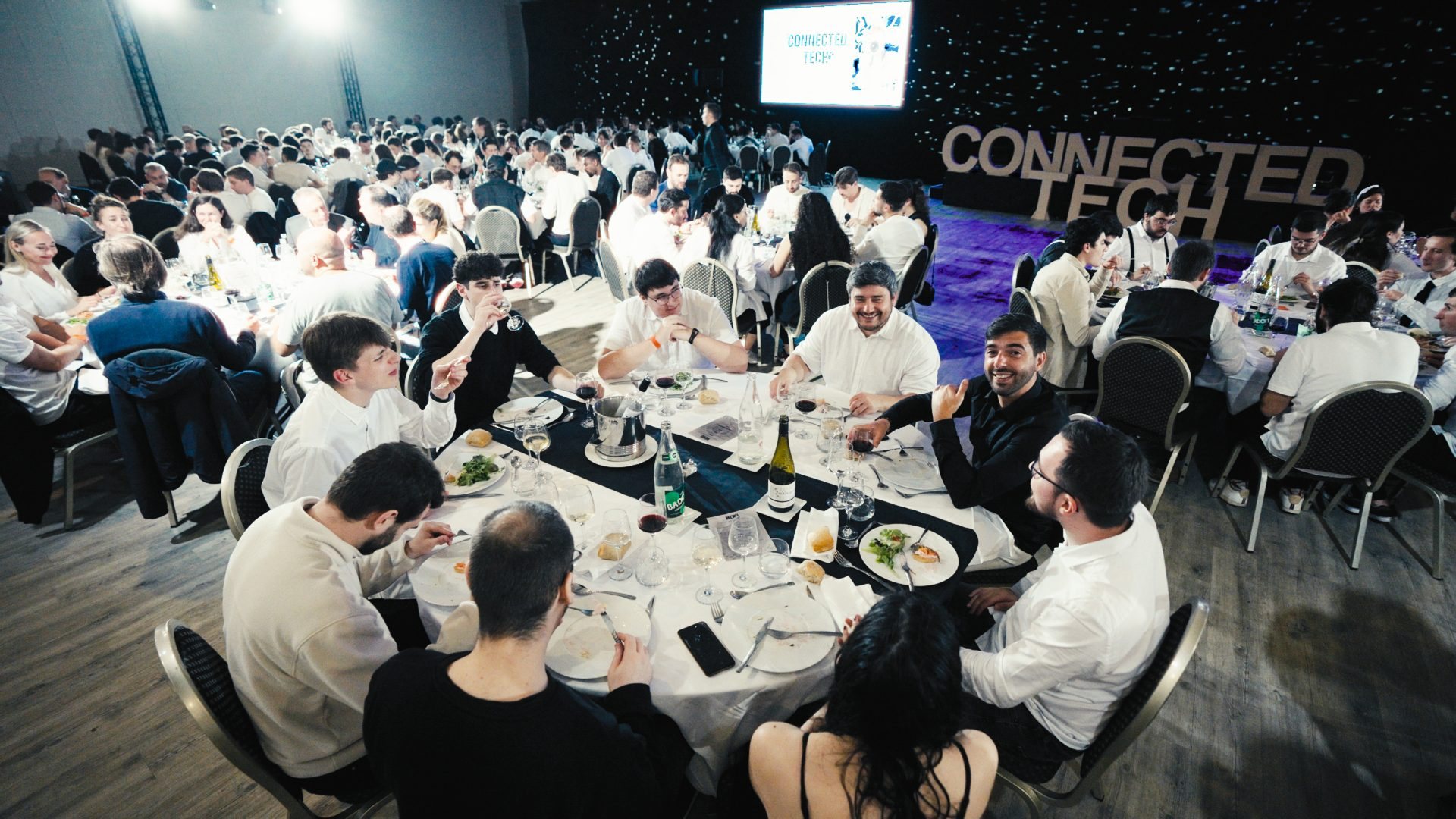
| 9.30 pm | Evening event: entertainment, games or DJ | The common thread continues in a more relaxed form |
Day 2: decide and leave with an action plan
| Time | Session | Why at this point |
|---|---|---|
| 8 am | Breakfast | A gentle start after the evening event |
| 9 am | Recap based on the previous day’s ideas | The group builds on what it produced |
| 9.30 am | Workshops or a second working session | Minds are fresh for in-depth topics |
| 11 am | Break, then workshop feedback | Each group shares its proposals |
| midday | Decisions and closing by senior management | A short closing links the decisions to what was experienced |
| 12.30 pm | Closing lunch | One last moment together |
| 2 pm | Short activity or visit, depending on your schedule | The retreat ends on a good memory |
| 4 pm | Transfers and group return journey | Everyone leaves at the planned time |
Over two days, a common thread makes all the difference: a shared question and a consistent visual identity, from the welcome to the evening event. The welcome sets the tone, the evening extends the theme and the next day’s recap builds on the previous day’s ideas.
If your teams come from several cities, we move the opening later and organise transfers from the station or airport. The schedule keeps the same balance; only the times change.
How to adapt the agenda for a residential, countryside, sales or leadership retreat, or a conference?
This template adapts to your format: only the balance between work, team bonding and the evening event changes.
Everything on site
On a residential retreat, meeting rooms, meals, evening event and bedrooms are in the same place: less travel, more time together. Partecis brought 70 employees together at the Hôtel Valpré, in Écully, with an urban rally in Vieux Lyon.
The grounds as a playing field
A countryside retreat moves activities outdoors, with an indoor plan B. For CMI Stratégies, the team Olympics and the escape game took over the chateau grounds, less than an hour from Paris by coach.
The direction, then the workshops
A sales retreat or kick-off opens with the objectives, then makes way for workshops. At the Château de Pizay, 20 sales staff and installers held discussions on the first afternoon and the next morning, with a wine-themed team building game.
Less plenary, more debate
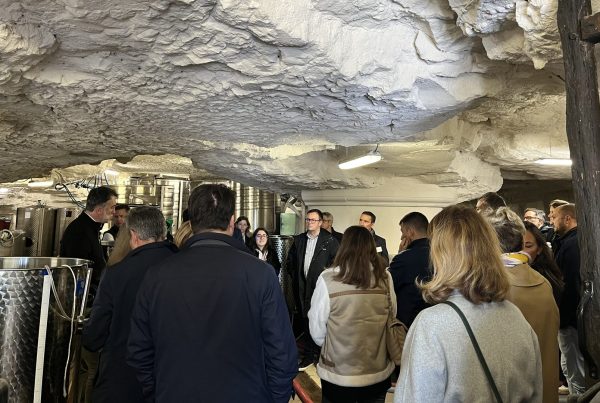
A leadership retreat leaves more room for debate and shared moments. Generali brought 40 senior executives together at Le Relais de Chambord: a visit to the chateau and dinner at a starred restaurant, then a vineyard tasting and a gourmet lunch the next day.
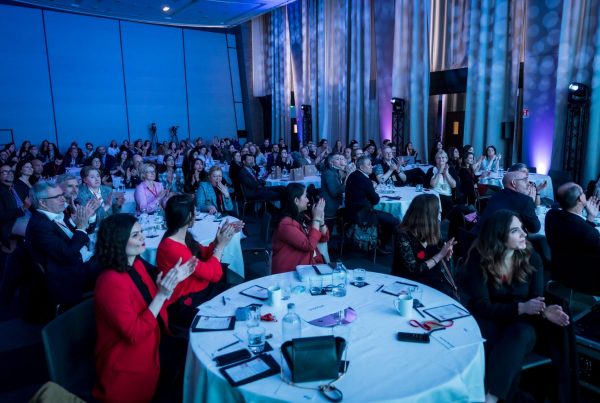
For a two-day company conference, the structure stays the same: a longer plenary on the first morning, workshops by role or by region, then an evening event that brings everyone together before the next day’s decisions.
2-day corporate retreat agenda examples: our case studies
Here is how three two-day, one-night retreats unfolded, for three very different groups.
| Stage | CMI Stratégies | Partecis | Swiss Life |
|---|---|---|---|
| Venue and group | 80 employees at the Château d’Ermenonville, in the Oise | 62 employees in Magny-le-Hongre, near Disneyland Paris | 13 employees in a hotel in the Sablon district, Brussels |
| Day 1, work | Coaches from Paris, then a plenary in the main drawing room | Plenary in theatre layout | Two-hour meeting in a meeting room |
| Day 1, team bonding | Team Olympics with six challenges in the grounds | Cardboard Formula 1 race in the garden | Two-hour smartphone rally in the city centre |
| Evening | Drinks in the courtyard, dinner, then DJ | Barbecue dinner and pub games evening | Dinner on the Grand-Place |
| Day 2, morning | Second working session | Final meeting | Visit to the Museum of Illusions |
| Day 2, end | Escape game in the grounds, then return by coach | Closing standing buffet lunch | Lunch at the hotel |
The full details of these agendas are in our case studies: Partecis in Marne-la-Vallée and Swiss Life in Brussels.
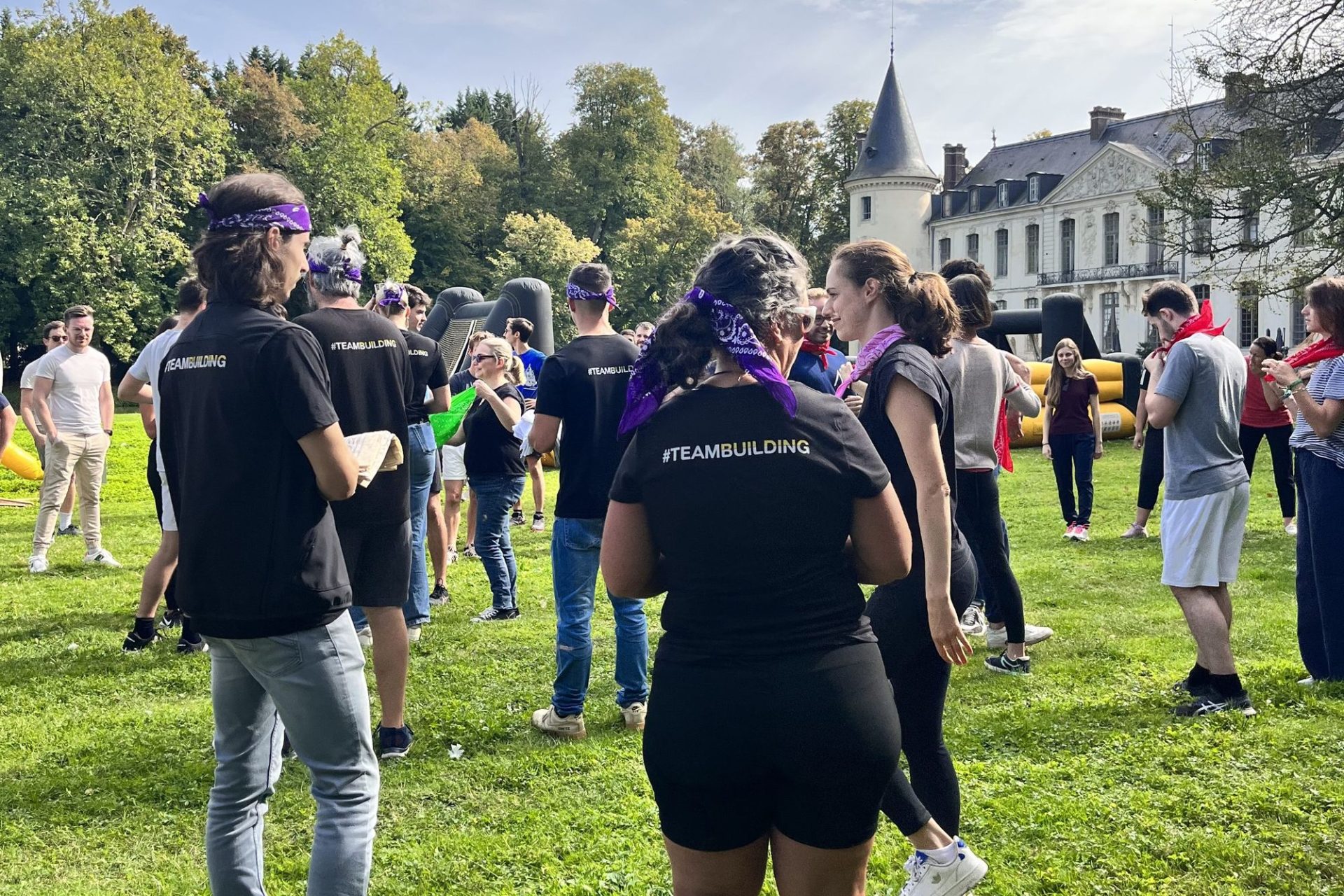
Two days in the countryside at the Château d’Ermenonville
For CMI Stratégies, work, team building activities, the evening event and the night all took place on a single estate, as the brief requested. In the evening, the plenary room became a dance floor.
1, 2 or 3-day corporate retreat: how do you choose the length?
The right length depends mainly on your objective and the distance to travel. Here are the criteria we look at with you.
| Criterion | 1 day | 2 days | 3 days |
|---|---|---|---|
| Typical objective | Share a message, work on a specific topic | Align teams and strengthen team spirit | Bring people together, train or reward |
| Night on site | None | One night | Two nights |
| Working time | A plenary and a workshop session | Two half-days or more | Mornings, with freer afternoons |
| Team bonding | A lunch and a drinks reception | An activity and an evening event | Several activities and a gala dinner |
| Recommended venue | Near your offices or a station | An easy-to-reach destination, a hotel with meeting rooms | A more distant destination or an exclusive-use venue |
| Logistics | A room, meals and breaks | Meeting rooms, bedrooms, transfers and an evening event | Meeting rooms, bedrooms, transfers and activities |
In short: one day is enough to deliver a message, two days bring it to life, three days build lasting momentum.
What does a one-day corporate retreat agenda look like?
Over one day, everything fits between the welcome coffee and the drinks reception: messages and workshops first, team bonding and feedback in the afternoon.
| Time | Session |
|---|---|
| 9 am | Welcome coffee with local produce |
| 9.30 am | Opening plenary: the direction and two or three key messages |
| 11 am | Break, then small-group workshops |
| 12.30 pm | Lunch that mixes departments |
| 2 pm | Team bonding activity or a walk around the venue |
| 3.30 pm | Workshop feedback and discussion with senior management |
| 5 pm | Closing, then drinks reception |
Our tip: an active post-lunch slot, with an activity or workshop rather than a long presentation. And to lighten a plenary, a few breaks are enough: at 3DS Outscale’s conference at T7, two or three separate breaks punctuated the plenary, a format the participants appreciated.
How do you build a three-day corporate retreat agenda?
A three-day, two-night retreat keeps some working time every day, with an afternoon of discovery and a gala dinner.
| Stage | Day 1 | Day 2 | Day 3 |
|---|---|---|---|
| Morning | Group travel | Breakout working sessions | Feedback, decisions and closing |
| Afternoon | Opening plenary and icebreaker activity | Discovering the region or a sports activity | Closing lunch and free time |
| Evening | Relaxed dinner | Gala dinner and evening event | Group return |
Three days leave time for variety: some working time each day, an afternoon of discovery and two evenings together. And the programme can evolve along the way without losing any of its coherence.
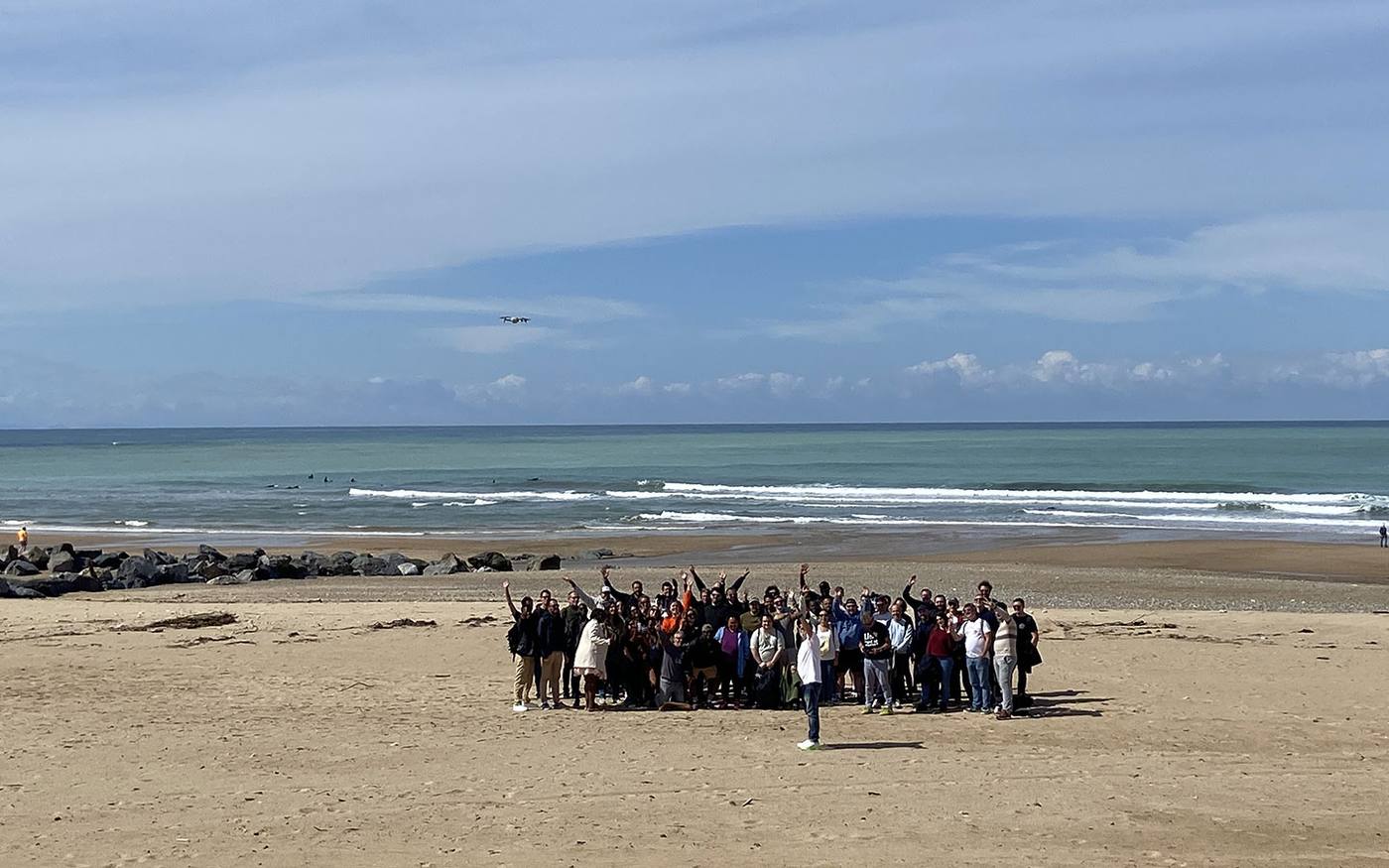
Three days and two nights for LIBON in the Basque Country
At the Sofitel Biarritz, LIBON’s team bonding stay combined a walking rally, Basque Olympics, a surfing lesson and a cooking challenge. Following a change of brief, the two half-days planned for meetings gave way to activities, and we reorganised the schedule accordingly.
1, 2 or 3 days: how long should a corporate retreat be? Our verdict
For a team retreat, we most often recommend a two-day, one-night residential retreat: enough time to work, share an evening and leave with decisions.
One day works very well for a specific message; three days come into their own for an annual company retreat, a more distant destination or an incentive trip.
Whatever the length, we keep one rule: do not fill every minute. An unhurried welcome, slightly longer breaks or free time before dinner extend the conversations and let your messages sink in.
To run the working sessions, our ideas for collaborative workshops will help; for the earlier steps, here is our guide to organising a corporate retreat, from the objective to the follow-up.
For a sustainable retreat, we also suggest simple options: group travel, meals of local and seasonal produce, hired or reused decor. They are part of our agency’s CSR approach.
Frequently asked questions about a corporate retreat agenda
The simplest way is to alternate listening, small-group workshops and informal moments, with a break roughly every hour and a half. Weevup likes to place interactive formats after lunch.
Yes: a shared activity creates bonds that the meeting room does not. Over one day, a walk or a one-hour workshop is enough; over two or three days, our team building activity ideas will give you some leads.
A simple common thread makes the link: a shared question, a visual identity carried from the welcome to the evening event, and a recap that builds on the previous day’s ideas. Your Weever, the project manager who supports you at Weevup, makes sure every session contributes to it.
Everything starts from your objective: it guides the venue, the programme and the evening event. We present several venues side by side, each with its own programme, then coordinate the meeting rooms, bedrooms, meals, activities and transfers. We take care of everything.
Allow two half-days or more: the plenary and workshops on the first day, then decisions on the second morning. A strategy retreat needs more, while a team bonding retreat leaves more room for activities. We adjust this balance with you.
A recap based on the previous day’s ideas, a working session, decisions and a short closing. Depending on your schedule, a lunch, a visit or a final activity rounds off the stay, like CMI Stratégies’ escape game in the chateau grounds.
Thursday and Friday come up often in our case studies, as for CMI Stratégies and Partecis. We then adapt to your calendar, the season and the venue’s availability.
Yes, with a venue close to your offices: the group meets on two consecutive days and everyone goes home in the evening. A dinner on the first day then keeps the connection. To strengthen team spirit, we still recommend the night on site.
We adapt to your budget: it depends mainly on your headcount, the destination, the venue and the programme. We build the project with you, item by item, and compare several venues in our proposal.
A conference agenda gives more room to the plenary, as it often brings a larger audience together around a single message. A retreat agenda leaves more time for workshops and team bonding. We build either one with you, day by day.
We prepare a clear programme with you, which we send out with the invitation: the main moments of each day, the times and the venue. On site, everyone then finds the schedule and practical information on their phone.
Let’s build your corporate retreat agenda together
Weevup, an event agency founded in Paris in 2015 and based in Le Vésinet (Yvelines), organises your corporate retreats, conferences and corporate parties in Paris, in Île-de-France, across France and abroad. EcoVadis silver medal (June 2026).