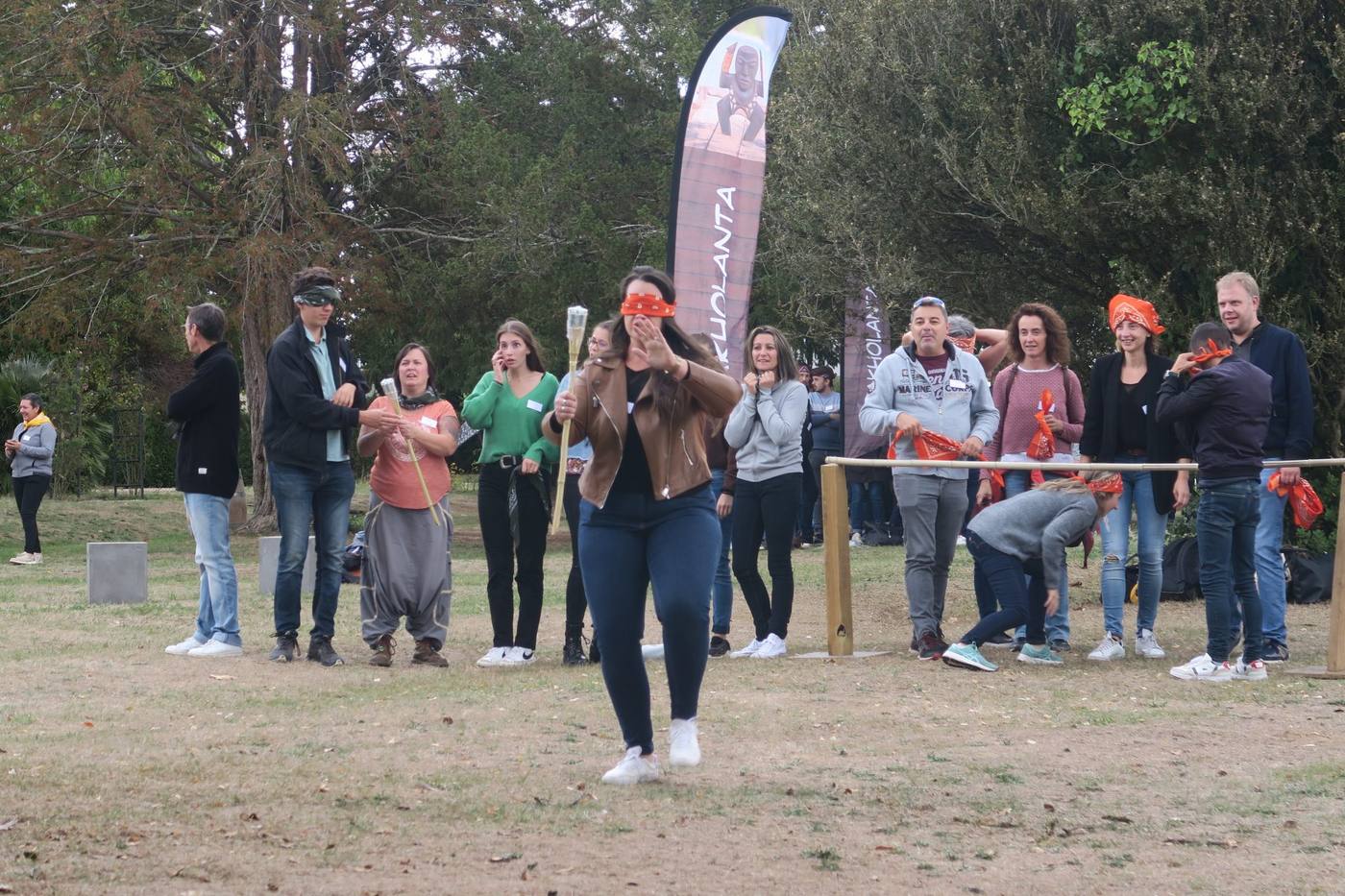
To organise a team building event, start with the objective, then set the group, date and budget, choose the venue and activity, prepare logistics and a back-up plan, and keep the effect going at the office. Here is why to organise one, the 9 steps in order, a typical running order and mistakes to avoid.
Are you in HR, a manager or an office manager, preparing your first team building event or hoping to make the next one more successful? This planning guide complements our 20 original team building ideas, to find the activity, and our team building agency page, if you would rather entrust the whole organisation to us.
- A team building event serves a precise objective: getting to know each other, bringing sites closer, onboarding, thanking or re-energising a team.
- 9 steps in order: the objective first, the activity only in sixth place.
- The activity is chosen according to the objective and the group size; the venue, according to the time available and the season.
- A group of more than 1,000 people plays in teams, in simultaneous workshops, with a shared kick-off and finale.
What does team building mean?
Team building means, quite literally, “building a team”. In a company, the term refers to a group activity, organised during working hours, that lets colleagues experience something other than their daily routine: a challenge, a workshop, a game, an outing. It is also called team bonding.
A team building event most often lasts half a day or a full day. It can stand alone or form part of a larger event: corporate retreat, conference, evening event. It differs from an incentive trip, a stay offered as a reward, where enjoyment comes before meetings.
Why organise a team building event?
You organise a team building event to create bonds that everyday work does not: colleagues who talk to each other, trust each other and help each other more readily afterwards. The activity is only a means. What matters is what should have changed the next day at the office.
- Getting to know each other: a recently formed team, many new hires or a new manager.
- Bringing distant teams together: colleagues from different sites or departments, who write to each other every day without ever having met.
- Onboarding new joiners: a relaxed moment to put faces to names, on its own or as part of an onboarding seminar.
- Taking a breather after an intense period: a financial close, a launch, an office move.
- Supporting a change: a merger, a reorganisation, a new company project.
- Thanking and celebrating: a great year, a target met, a company anniversary.
For ELO Énergie, the objective was clear: bring the Nantes and Lyon teams together at the end of a week of training. The 85 participants moved from speeches to team building and dinner at the EKLO Hôtel in Nantes, without changing address.
A team building event does not fix everything. It replaces neither day-to-day management nor a frank conversation when a team is going through a conflict. It does, however, create momentum, provided it has a purpose and a follow-up.
How to organise a team building event: the 9 planning steps in order
Wondering how to plan a team building day that everyone will enjoy? Follow these nine team building planning steps in order: each one prepares the next. At Weevup, your project manager takes care of them one by one: you choose, we organise.
- The objective. One sentence is enough: “bring head office and the branches closer”, “welcome the newcomers”. We write it with you in our first conversation, because it guides every choice that follows.
- The group. Headcount, ages, jobs, languages, physical fitness, dietary requirements, people with reduced mobility: the activity must suit everyone, not the group average.
- The date and duration. During working hours, away from financial closes, holidays and major internal events. Half a day is often enough; a full day leaves time for lunch.
- The budget. An overall budget, broken down by item: venue, activity, facilitators, meals, transfers. It shapes the format without taking anything away from the quality of the moment.
- The venue. Your offices, a privately hired venue, the outdoors or your retreat hotel. We look for it according to the group size, your teams’ journeys and the season.
- The activity. It comes only now, chosen according to the objective and the group. We present two or three, side by side, for you to compare.
- The logistics and the back-up plan. Transfers, meals, equipment, safety, and a shelter planned in advance whenever the activity takes place outdoors.
- The announcement to the teams. A clear invitation: the date, the venue, the dress code, the programme. A little mystery about the activity builds anticipation, without worrying anyone.
- The day itself and the follow-up. Teams made up in advance, a host who sets the pace, then shared photos and a short questionnaire to gather feedback.
The larger the group, the further ahead a team building event needs to be organised: large venues and good dates go quickly, especially in spring and at the end of the year.
A team building event often opens or closes a larger event. Our guides explain how to organise a corporate retreat, a company conference or a corporate party, with the same logic: the objective first.
Which team building activities? Choosing by objective and group size
Which activity for a team building event? The one that serves your objective and that the whole group can take part in at the same time. Four questions are enough to decide: what do you want to achieve, how many will you be, who are the participants, and at what time of day?
| Your objective | The type of activity | For a small team | For a large group |
|---|---|---|---|
| Getting to know each other | Mystery game, treasure hunt or quiz, in mixed teams | A single mystery game, played all together | A treasure hunt with several starting points, teams drawn at random |
| Bringing two sites closer | Construction challenge, team Olympics | Pairs formed across the two sites | Teams that mix the sites, a shared ranking |
| Onboarding new joiners | Introductory workshop, game about the company’s history | A workshop where long-standing staff and newcomers team up | A circuit of workshops, with a long-standing colleague in each team |
| Unwinding after the effort | Outdoors, relaxation or tasting | A nature outing or a quiet workshop | À la carte activities, where everyone chooses their own |
| Stimulating creativity | Collective creation, cooking in teams | A shared artwork, made together | A mural painted team by team, assembled in front of everyone |
| Giving meaning | Charity or sustainable activity | A workshop alongside a charity | Charity workshops run in parallel |
| Thanking and celebrating | Festive activity, followed by an evening event | A cocktail-making workshop, then dinner | Workshops in the afternoon, the evening event in the same place |
This table gives the family of activities. For the ideas themselves, our corporate team building activities are grouped by theme: at the office, outdoors, creative, culinary or charitable.
That leaves the question of competition. A ranking motivates some teams and makes others uncomfortable: our article on non-competitive team building presents activities where everyone wins together. To give meaning, see our CSR team building.
Group size also changes the format: a single shared activity for a small team, rotating workshops beyond that. Our article on team building for small or large groups covers each size in detail.

Bio-Rad: an activity chosen to meet three expectations
After a plenary, Bio-Rad wanted to unite the 37 participants of an R&D team, call on their creativity and include a sustainable dimension.
Our proposal: a team cooking challenge, savoury and sweet, guided by a chef, on site in Marnes-la-Coquette. The common thread: avoiding food waste.
Where to hold a team building event: offices, private venue, outdoors or corporate retreat?
A team building event can be held in your offices, in a privately hired venue, outdoors or at your retreat venue. The right choice depends on the time you have, the group size and the season. Here is what each option allows.
In your offices
No travel, light organisation: the activity comes to you, after a meeting or at the end of the day. Bio-Rad held its cooking challenge on its own premises.
In a privately hired venue
A hotel, a restaurant or a room all to yourselves, with several spaces to move from the activity to the meal. In the capital, see our team building in Paris.
Outdoors
A park, a beach or a forest, to get moving and enjoy a change of air, always with a sheltered alternative. In fine weather, see our summer team building.
During a corporate retreat
The activity breaks up the meetings and lets the group discover the destination. Swiss Life experienced this in Marseille: its 18 employees divided their stay between meetings, a sea kayaking outing at Le Frioul and a rally through the city centre.
- A short, simple journey for the whole group, from your offices or your various sites.
- A space large enough for all the teams to play at the same time.
- Shelter close at hand, if part of the programme takes place outside.
- Access for people with reduced mobility.
- Food and drink on site, to keep the conversation going after the activity.
- A quiet spot to launch the activity and announce the results.
Outdoors, the venue is half the programme. For Excelia, we privately hired Le Bastion, open to the sea, in Saint-Martin-de-Ré: the 250 staff from its three campuses moved from small-group workshops to a cocktail dinner and an evening of dancing. Our article on outdoor team building offers other ideas.
In winter or uncertain weather, a hotel, a château or your premises host the same formats in the warm: our winter team building article compares indoors and outdoors. In every case, we find the venue with you and organise the whole team building event around it.
The typical running order of a half-day team building event
A half-day of team building follows seven stages, from the welcome to the social time. The activity itself takes up only part of the programme: the kick-off and the finale matter just as much, because that is when the whole group comes together.
| The stage | What your teams experience | What we arrange |
|---|---|---|
| The welcome | A coffee, a word of welcome, the programme announced | Signage, cloakroom, list of participants |
| The icebreaker | A short game to relax and get talking | A host on the microphone, a simple instruction |
| The teams | Everyone joins their team, mixed in advance | Prepared lists, coloured scarves, captains |
| The activity | The challenge, workshop or game, played in teams | Facilitators, equipment, rotations, safety |
| The break | A glass of water, a piece of fruit, a few photos | Drinks, snacks, a shady spot or shelter |
| The finale | The results or creations, revealed in front of everyone | Sound system, ranking, a word from management |
| The social time | A drinks reception or a meal to keep the conversation going | Buffet, non-alcoholic drinks, organised journeys home |
For the second stage, our icebreaker games put the group at ease. Over a full day, the morning is often for work and the afternoon for the activity: that is the principle of the team cohesion day.
Over two days, the pace stretches out. At the Château d’Ermenonville, the 80 or so employees of CMI Stratégies enjoyed team Olympics and an escape game in the park, between a plenary, an evening of dancing and a working session.
Organising a team building event: mistakes to avoid
Most failed team building events fail before the day itself, when the choices are made. Here are the mistakes we see most often, and how to avoid them.
- Choosing the activity before the objective. An appealing idea is of no use if it does not deliver what you expect from the group.
- Forgetting part of the group. A challenge that is too physical, an alcohol tasting with no other option, forced public speaking: everyone must be able to take part in their own way.
- Eating into personal time. On a Saturday or a day off, the invitation becomes an obligation. Working hours remain the right time, even if the day carries on into an evening event.
- Letting teams form by themselves. Friends stick together, and departments do not mix. We make up the teams in advance.
- Forcing competition. A ranking taken too seriously divides. A little at stake is enough, and humour does the rest.
- Setting off without a back-up plan. Rain, heat, a late coach: every hitch has its answer, planned before the day.
- Overloading the programme. With no break or free time, nobody talks to each other, when that is the whole point.
- Planning nothing afterwards. Without shared photos or a word from management, the momentum soon fades.
Announce the objective right at the kick-off, in one sentence, then let the manager play in a team like everyone else. Your employees understand why they are there, and the activity does the rest.
Organising a team building event for a large group of more than 1,000 people
We organise team building events for groups of more than 1,000 people. At this scale, the hardest part is not the activity but getting everyone moving: starting, rotating and reuniting dozens of teams, with no downtime, in a venue large enough for them all.
- Nobody waits their turn: simultaneous workshops or a connected game, every team is busy from kick-off to finale.
- Balanced teams, made up in advance, each with its own colour and meeting point.
- A schedule kept from start to finish, with one facilitator per workshop and a project manager coordinating the whole event.
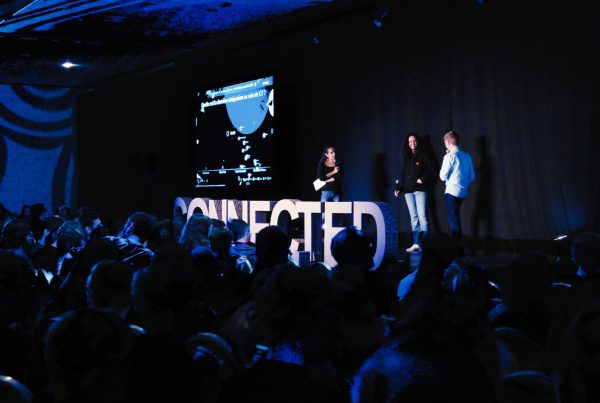
- A shared kick-off and finale, with a sound system that carries to the back row.
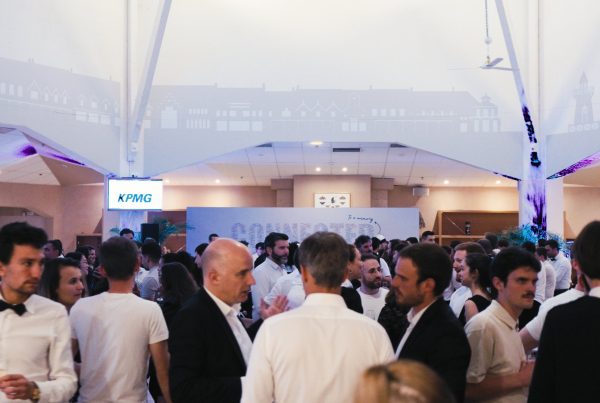
For KPMG, team Olympics were on the programme of a corporate retreat for 900 participants at Center Parcs Lac d’Ailette. Elanco’s 350 employees, meanwhile, discovered Colmar through a connected city rally, during their corporate retreat in Alsace. All the formats are on our team building for large groups page.
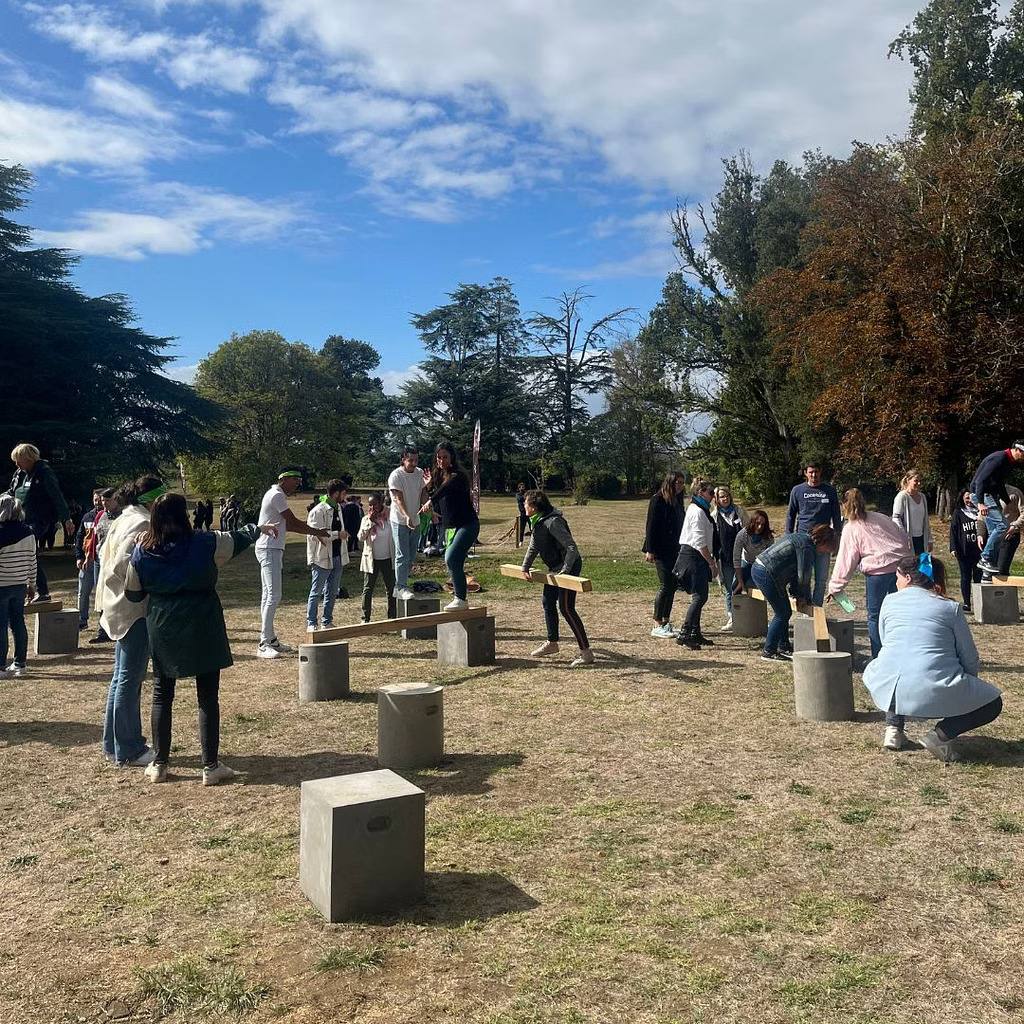
Cerfrance: 170 participants, a single activity in 5 workshops
Cerfrance was bringing together 170 participants at the Château de Seguin, near Bordeaux, for a team building day, with one expectation: a friendly moment shared by everyone.
Our answer: a single activity, split into 5 workshops. Participants think things through, taste blind and tackle an obstacle course, always as a team.
Organise your team building event with Weevup
Venue, activity, facilitators, meals, transfers, back-up plan: we take care of everything, with a dedicated project manager, from the first conversation to the day itself. We take your brief with you in conversation, then present two or three programmes for you to compare.
For an activity that reflects your company, we devise the theme, the challenges and the staging: see our bespoke team building. We also organise the corporate retreat, conference or evening event around it, anywhere in France and abroad.
How to organise a team building event: frequently asked questions
In nine steps, in order: the objective, the group, the date, the budget, the venue, the activity, the logistics with a back-up plan, the announcement to the teams, then the day itself and the follow-up. The activity is chosen after the objective, never before. We handle every step with you.
To create bonds that everyday work does not: getting to know each other, bringing sites closer, onboarding new joiners, taking a breather after an intense period or thanking a team. For ELO Énergie, it brought the Nantes and Lyon teams together at the end of a week of training.
Those that serve your objective and that the whole group can take part in: a treasure hunt or mystery game to get acquainted, a construction challenge to bring departments closer, a creative or cooking workshop to stimulate creativity, a workshop with a charity to give meaning. We present two or three for you to compare.
In your offices, in a privately hired venue, outdoors or at your retreat venue. Bio-Rad held its own at its Marnes-la-Coquette premises, Excelia on the Île de Ré, facing the sea. We find the venue and organise the whole team building event around it.
Team building means “building a team”. The term refers to a group activity offered by the company, during working hours, to help colleagues get to know each other better and work together better: a challenge, a workshop, a game or an outing.
Most often half a day: welcome, icebreaker, activity, finale and social time. A full day leaves time for lunch and a morning of work. On a corporate retreat, the activity takes up a morning or a late afternoon.
It depends mainly on the group size, the venue, the activity, the number of facilitators and the meal. In your offices, it stays modest; a privately hired venue, transfers and an evening event increase it. We build the programme around your budget, item by item.
Yes. We split the group into teams of equal size, across simultaneous workshops or one large connected game, with a shared kick-off and finale. We built team Olympics into KPMG’s corporate retreat for 900 participants, and we adapt to every group size.
Your team building event with Weevup
Weevup, a corporate event agency based in Le Vésinet (Yvelines), organises your team building events, corporate retreats, conferences and corporate parties, in Paris, across France and abroad. EcoVadis silver medal.