Why organise a corporate retreat? To bring your teams together away from the office and achieve what the daily routine does not allow: aligning them on a direction, uniting them, launching a year or a project, training, thanking, onboarding. A useful retreat serves one priority objective, set with senior management, and is then measured.
Executive, HR or manager, do you need to justify a corporate retreat or frame its objectives? This article covers the why: what a company offsite is for, what it brings, how to measure it. For the method, follow our guide to organising a corporate retreat; to entrust it to us, see our corporate retreat agency.
- A corporate retreat serves six main objectives: aligning, uniting, launching, training, thanking, onboarding.
- One priority objective, and only one, guides the format, duration, venue and programme.
- Objectives are set with senior management, in one sentence: an audience, an expected effect, a sign of success.
- The benefits are measured before, during and after, by return on objectives rather than by a financial calculation.
Why organise a corporate retreat? The 6 objectives
What is a corporate retreat for? To produce a precise change in your teams. Here are six objectives, illustrated by events we have organised. A retreat can serve two of them, rarely more: the first one decides everything else.
Aligning teams on a direction
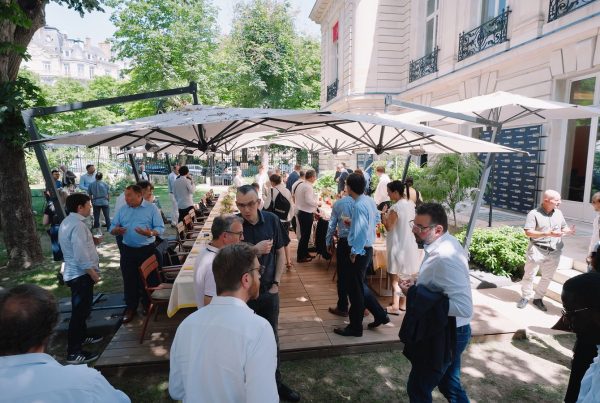
Sharing results, a strategy and priorities, then checking that everyone understands them in the same way. KPMG brought its managers together in a plenary in a private mansion, around the objectives achieved and the projects ahead. For a small committee, see our leadership retreat.
Uniting and bonding teams
Bringing together colleagues who rarely cross paths: departments, professions, sites. Pacific et Général gathered 20 sales staff and installers at the Château de Pizay for two days, to create time for discussion between these two groups. See our ideas for a team cohesion retreat.
Launching a year or a project
Opening a financial year, presenting a roadmap, kicking off a project or a new organisation. Scalian held its annual kick-off at its Neuilly premises, with 280 participants. Our company kick-off page presents these launch formats.
Training and developing people
Passing on a method, a product or a tool, far from office interruptions. During their annual retreat in Alsace, Elanco’s 350 employees visited the Huningue production site, to understand their products better. For a sales force, see the sales conference.
Thanking and rewarding
Recognising a great year or a special effort, with a programme that gives pride of place to activities and shared moments. In the Basque Country, the 58 participants of Libon’s incentive retreat shared three days at the Sofitel Biarritz: Basque team Olympics, a walking rally and a surfing taster. See our incentive trip agency.
Onboarding and bringing people closer
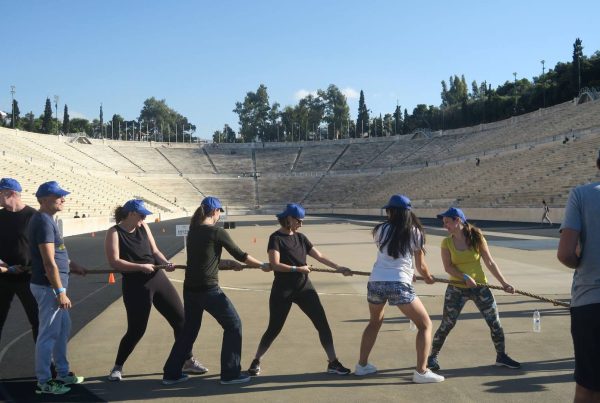
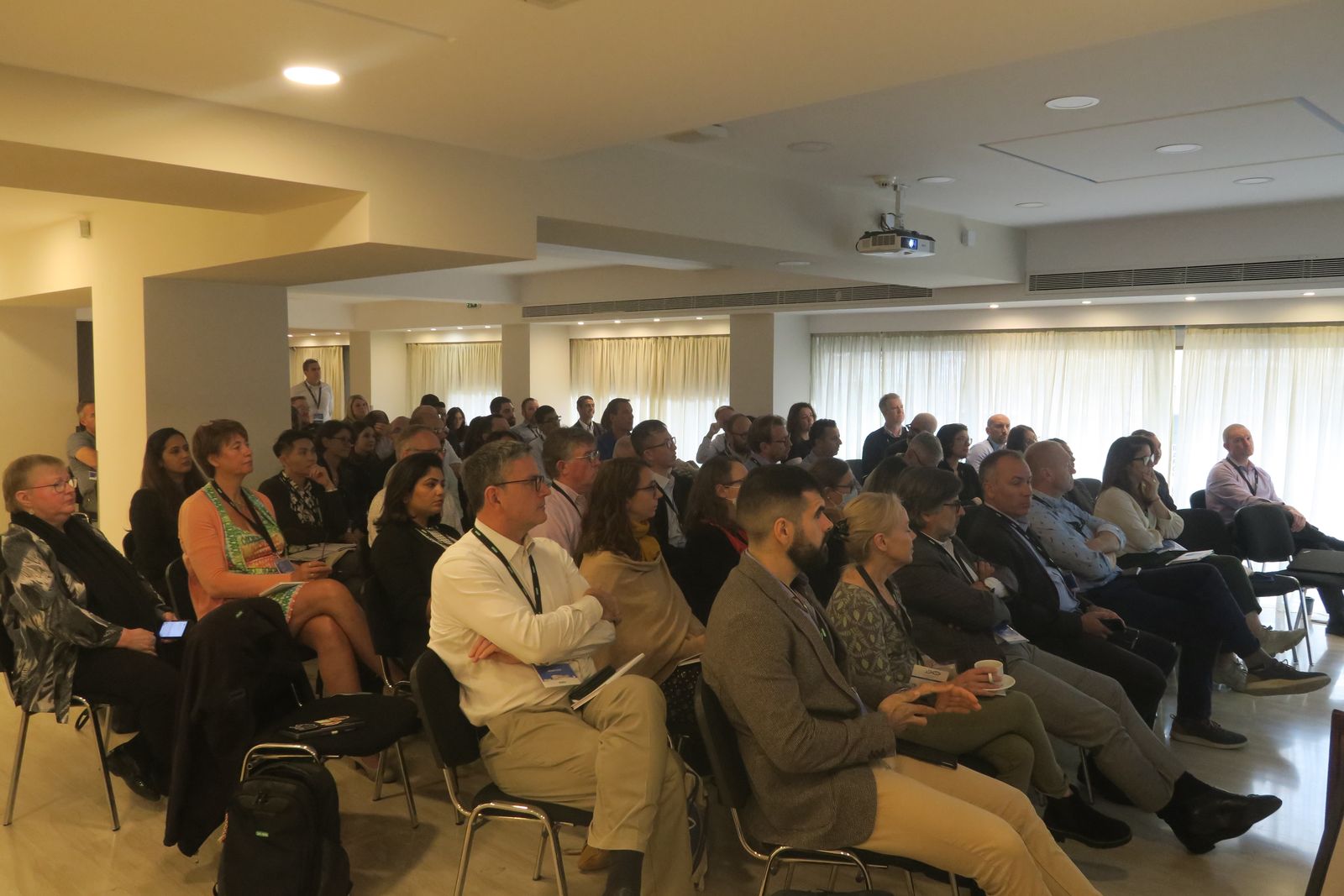
Welcoming new employees, bringing together distant sites or teams from several countries. For its corporate retreat in Athens, a Bio-Rad division gathered its teams, who came from around fifteen countries: 70 employees staying four days in the same hotel. For newcomers, see our onboarding seminar.
These objectives combine, but they do not carry the same weight. A retreat that tries to do everything in two days leaves room for nothing. Choose the objective that justifies the trip; the others come as a bonus, simply from being together.
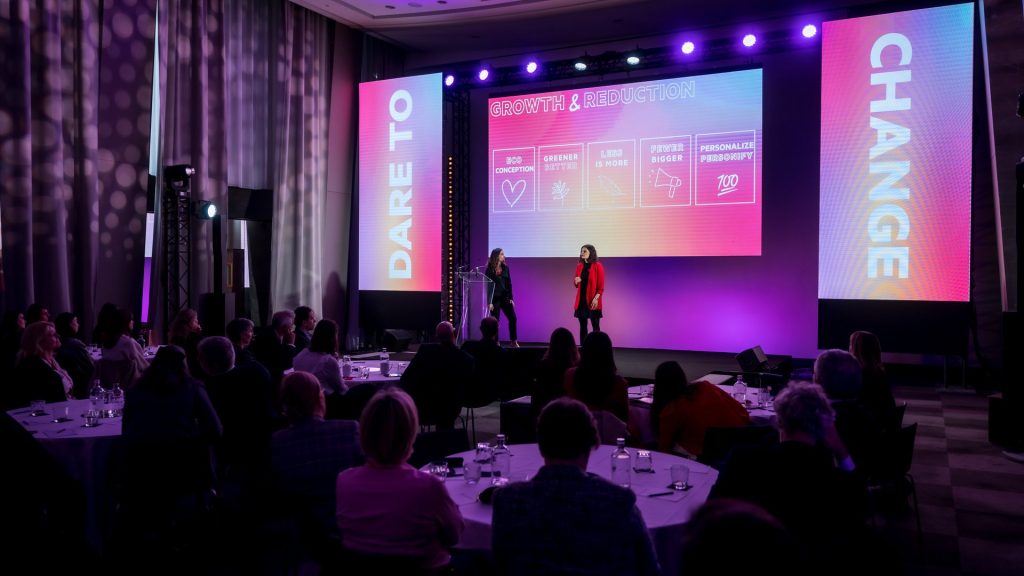
SVR: the year in review and the ambitions for the next
For its annual international retreat, the SVR laboratory brought 125 participants together in Paris, with a twofold objective: reviewing the current year and preparing the ambitions for the next.
Hotels, dinners and activities were within walking distance, for a programme experienced on foot: a dinner on a barge on the Seine, a lunch facing the Eiffel Tower and an electric tuk-tuk ride, with a quiz about Paris.
What is a corporate retreat? Definition
A corporate retreat is a working meeting held away from the usual setting, over one or several days, to move a shared topic forward and bring participants closer. It brings together a leadership team, managers, one team or the whole company.
It differs from a meeting in the time it gives and in the change of scenery. It also differs from a conference, built around a large plenary: a retreat alternates small-group work, informal moments and activities. Our comparison details the difference between a seminar and a conference.
A retreat readily takes its time: around six in ten of our retreats last three days or more, according to our corporate retreat study, based on more than 120 events organised by Weevup.
Benefits of a corporate retreat: what is the purpose of a company offsite?
A retreat brings three things that no meeting provides: time, attention and a different setting. Its benefits can be seen at three levels of the company.
- For your teams: understanding where the company is going, meeting colleagues from other departments, feeling listened to and recognised.
- For your managers: leaving with clear messages to pass on, and more direct links with their peers.
- For senior management: hearing from the field, testing its messages and deciding faster, because the right people are in the same room.
The change of scenery matters too. Away from screens and urgent matters, people talk differently: nearly three in four of our retreats take place outside Île-de-France, elsewhere in France or abroad, according to our corporate retreat statistics.
A retreat also takes working time, travel and a budget. That is why its objective must be stated clearly: an offsite that knows what it is looking for is easy to defend in front of a managing director or a finance director.
Which corporate retreat format suits your objective?
Each objective calls for a format, a duration and a pace. This table gives our benchmarks; we then adjust them to your group size, your calendar and your budget.
| Your objective | Recommended retreat format | What makes the difference |
|---|---|---|
| Aligning on a direction | Leadership retreat or management offsite, somewhere quiet, away from the office | Long working sessions, and decisions written down before leaving |
| Uniting teams | Team cohesion retreat, with a night on site | Mixed groups, a shared activity and an evening event |
| Launching the year | Company kick-off or annual retreat, in plenary then in workshops | A short message from management, then time for each team to make it their own |
| Launching a project | Working retreat in a small group, with the full project team | Workshops that produce a plan, roles and a timetable |
| Training | Training seminar or sales conference | Short workshops, practice, a visit or a demonstration |
| Thanking | Incentive retreat or incentive trip | More activities than meetings, in a venue that is a treat |
| Onboarding newcomers | Onboarding seminar, over one day or with a night on site | Getting to know each other, understanding the company, meeting senior management |
| Bringing sites closer | Residential seminar in a venue that is central for everyone | A simple journey for each person, and the whole group staying in the same place |
Torn between two formats? Go back to the starting question: what should have changed by the time you return? The duration, venue and programme follow from it. If your employees come from several regions, also read our guide to the multi-site corporate retreat.
How do you set corporate retreat objectives with senior management?
The objectives of a retreat are defined with senior management before any talk of venue or date. One scoping meeting is often enough, if it answers five questions, in this order.
- What should have changed by the time we return? A decision made, a message understood, teams that know each other: the answer gives the priority objective.
- For whom? Leadership team, managers, one team or the whole company: the audience sets the tone, the duration and the size of the venue.
- How will we know it has worked? Pick one or two simple signs that everyone will be able to observe after the retreat.
- What are we giving up? A retreat does not settle everything: setting topics aside protects the main objective.
- Who owns the follow-up? Name, at the scoping stage, the person who will follow the decisions through after the return.
Then write the objective in one sentence: an audience, an expected effect, a sign of success. For example: “our managers leave with the year’s three priorities and know how to present them to their team”.
If senior management hesitates between several objectives, rank them. The first decides the format; the others find their place in a workshop, a meal or an evening event. Involving two or three managers in this scoping avoids a programme designed only from the top.
Ask your senior management to finish this sentence: “This retreat will be a success if, on their return, our teams…”. The end of the sentence tells us which format, venue and programme to propose to you.
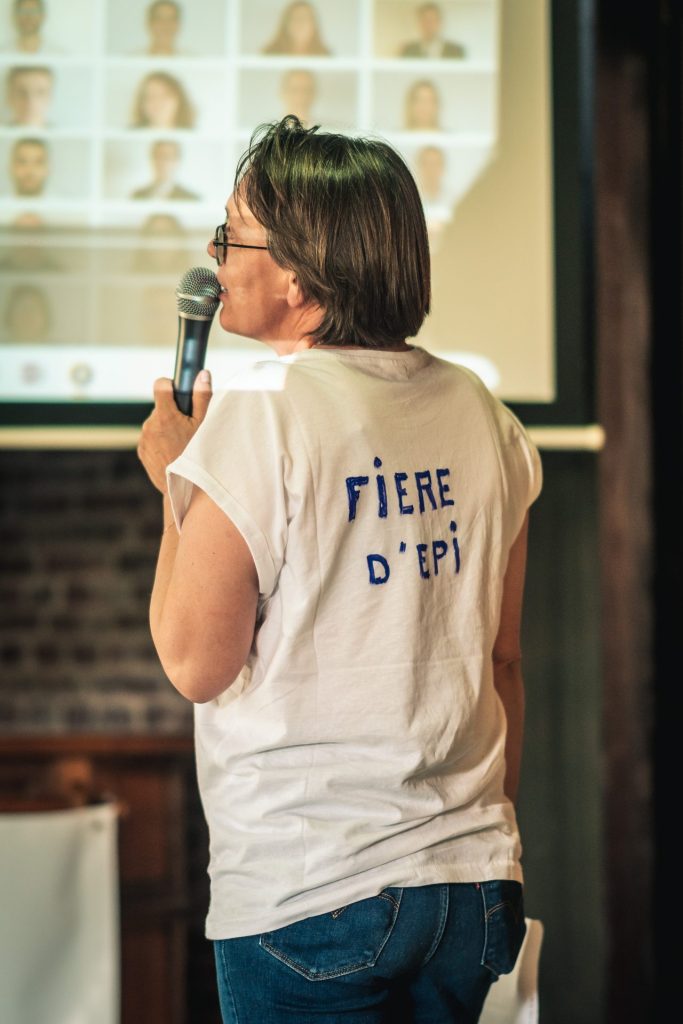
EPI 94: the year’s figures, then a team activity
For its annual retreat, EPI 94 brought 110 participants together at the Jablines-Annet leisure island, in Seine-et-Marne, an hour from Paris. The objective of the day: going back over the year’s figures and bonding the teams.
The request was initially for two days. By refining it with the client, we settled on a single day in the countryside: a plenary, then a team water activity.
Corporate retreat ROI: how do you measure the return on investment?
The return on investment of a retreat is measured by comparing the situation after the retreat with the objective set at the start. For an internal event, the gains are rarely counted in sales: we talk instead of return on objectives. Did the retreat produce the expected effect?
Measurement is prepared before departure, then carried out in four stages.
| When | What you measure | How |
|---|---|---|
| Before the retreat | The starting point: what teams know, think and expect | A few questions asked at registration |
| During | Participation and understanding of the messages | Live polls, questions asked, attendance at workshops |
| Straight after | Satisfaction and what each person remembers | On-the-spot questionnaire, feedback collected on the app |
| A few weeks later | What has changed: decisions applied, projects launched, links between teams | Catch-up with managers, action tracking |
A few examples from our clients. For Toupret’s hybrid conference, the room and the connected teams answered polls and built word clouds live. At the Cherry Ventures retreat, the dedicated app was used to collect participants’ impressions, useful material for the review.
The simplest sign remains what happens next: decisions kept, managers who take up the messages, an event that is repeated. Swiss Life has entrusted us with several retreats, in Reims, in Brussels or on the Île de Ré.
To go further, our article on the ROI of a corporate event details the indicators to track and how to collect the data.
How often should you organise a corporate retreat?
Allow for one retreat a year for a whole team or the whole company, complemented by smaller gatherings for senior management and managers. The right frequency depends on what is changing in your organisation: strategy, headcount, structure.
- Once a year: the annual retreat, to take stock and present the roadmap. This is the event that SVR, Elanco or EPI 94 have entrusted to us.
- Twice a year: a launch at the start of the year, then a team-bonding moment before the summer or just after it.
- At each key stage: new leadership, teams coming together, a project launch, the arrival of many new employees.
As for the calendar, two in three of our retreats take place in May, June, September or October, according to our study. From January to April, the choice of venues is often wider: a good time to launch the year, for example with a winter corporate retreat.
One well-prepared retreat a year is better than several gatherings without an objective. If the last one changed nothing, the question is not the frequency, but what was expected of it.
Corporate retreat: the mistakes to avoid
A company offsite rarely disappoints because of the venue. It disappoints when nobody can say, on their return, what it was for. Here are the mistakes we see most often, and what works instead.
- Choosing the venue before the objective. A beautiful estate does not replace a purpose: decide first what needs to change.
- Pursuing too many objectives. Aligning, training, celebrating and onboarding in two days: nothing has time to take hold. Keep one, two at most.
- Filling every hour. Without breaks or free time, the conversations that matter do not happen.
- Talking without listening. A string of presentations is tiring: plan workshops and questions to senior management.
- Keeping the objective to yourself. Announce it in the invitation: participants arrive prepared.
- Forgetting the follow-up. Without written decisions or managers to relay them, the momentum soon fades.
- Measuring nothing. Without a starting point or a review, it is hard to defend the next retreat.
Organise your corporate retreat with Weevup
Do you have the objective, or just the feeling that it is time to bring your teams together? From our first conversation, your dedicated project manager takes your brief with you, then we take care of everything: venue, programme, accommodation, transfers, technical production, activities and on-site presence.
We bring together a leadership team just as readily as more than 1,000 participants, in France and abroad. Browse our formats and case studies on the corporate retreat page, or follow the method step by step in our guide: how to organise a corporate retreat.
Why organise a corporate retreat? Frequently asked questions on objectives
To bring your teams together away from the office and produce a precise change: a strategy understood, decisions made, links created between departments, new skills. A retreat serves first of all one priority objective, chosen with senior management, which guides the format, venue and programme.
Six objectives come up most often: aligning teams on a direction, uniting them, launching a year or a project, training, thanking and onboarding new employees. A retreat serves one as a priority, sometimes two.
A corporate retreat is a working meeting held away from the usual setting, over one or several days, to move a shared topic forward and bring participants closer. It alternates plenary, workshops, informal moments and activities.
Teams that understand the strategy, managers who relay it, a senior management that hears from the field and colleagues who know each other better. The change of scenery helps everyone to step back and speak more freely.
Understanding where the company is going, meeting senior management and colleagues from other departments, learning and feeling recognised. A programme that alternates work, free time and activities makes people want to get involved, then to come back.
By answering one question together: what should have changed by the time you return? Then write the objective in one sentence, with an audience, an expected effect and a sign of success, and rank the secondary objectives.
By comparing the situation after the retreat with the objective set at the start: messages understood, decisions applied, satisfaction, links between teams. A poll during the plenary, an on-the-spot questionnaire and a catch-up with managers a few weeks later give a reliable measure.
Most often once a year for the whole team, with smaller gatherings for senior management and managers. Add a retreat at each key stage: new strategy, teams coming together, a project launch.
Your corporate retreat with Weevup
Weevup, a corporate event agency based in Le Vésinet (Yvelines), organises your corporate retreats, conferences, corporate parties and team building events, in Paris, across France and abroad. EcoVadis silver medal.