An event carbon footprint assessment is built in five steps: set the scope, identify emission items, collect the data, calculate, then track a few indicators. At Weevup, we support you throughout: if you wish, we estimate the footprint from the design stage to lighten the heaviest items, then gather the event data with you.
This method is part of our CSR support for events. It applies to every format, from a residential seminar to a company plenary, and it also serves your reporting: the emissions linked to your events count among your company’s indirect emissions.
- Step 1: set the scope, in other words what is counted and what is not.
- Step 2: identify the emission items: travel, accommodation, meals, venue, production, goodies and digital.
- Step 3: collect simple data, from the registration form to supplier quotes.
- Step 4: calculate with a recognised tool and official emission factors.
- Step 5: track a few indicators, share them and use them for the next event.
What is an event carbon footprint assessment?
It is the estimate of the greenhouse gas emissions linked to an event, expressed in CO2 equivalent and broken down item by item. It is done in two stages:
- before the event, an estimate compares several scenarios (destination, mode of transport, menu) so you can make an informed choice;
- after the event, an assessment uses the actual data and shows where the emissions lie.
The assessment covers your event, not the company organising it. At Weevup, our EcoVadis silver medal (June 2026) relates to our business practices; the footprint of your seminar or conference is measured separately, event by event.
How do you calculate an event carbon footprint, step by step?
- Set the scope. Number of participants, duration, venues, and what you choose to include: return travel, on-site transfers, hotel nights, meals, venue, production. A scope set down in writing lets you compare two events.
- Identify the emission items. Each item corresponds to a category of event services. The table below details them, with the data to gather.
- Collect the data. The registration form is your most useful tool: each participant’s departure city and mode of transport. The rest comes from suppliers: number of meals and menus served, hotel nights, equipment hired or bought, quantities printed, the venue’s energy consumption when available.
- Calculate. A recognised calculation tool converts this data into emissions using official emission factors. The result is expressed as a total and per participant, which makes comparisons easier.
- Analyse and share. The heaviest items stand out clearly, and they are where the next choices will focus first. A few indicators, shared with your teams or your CSR department, are enough to make the approach visible.
The simplest approach is to add two questions to the registration form: the departure city and the intended mode of transport. This is the most useful data in the assessment, and it also helps us organise group travel.
What should an event carbon footprint include, and with what data?
Most often, participant travel weighs the most: this is where the destination and the mode of transport change everything. Here are the items we review with you.
| Item | Data to collect | Possible lever |
|---|---|---|
| Participant travel | Departure city, mode of transport, outbound and return | Destination served by direct train, group travel |
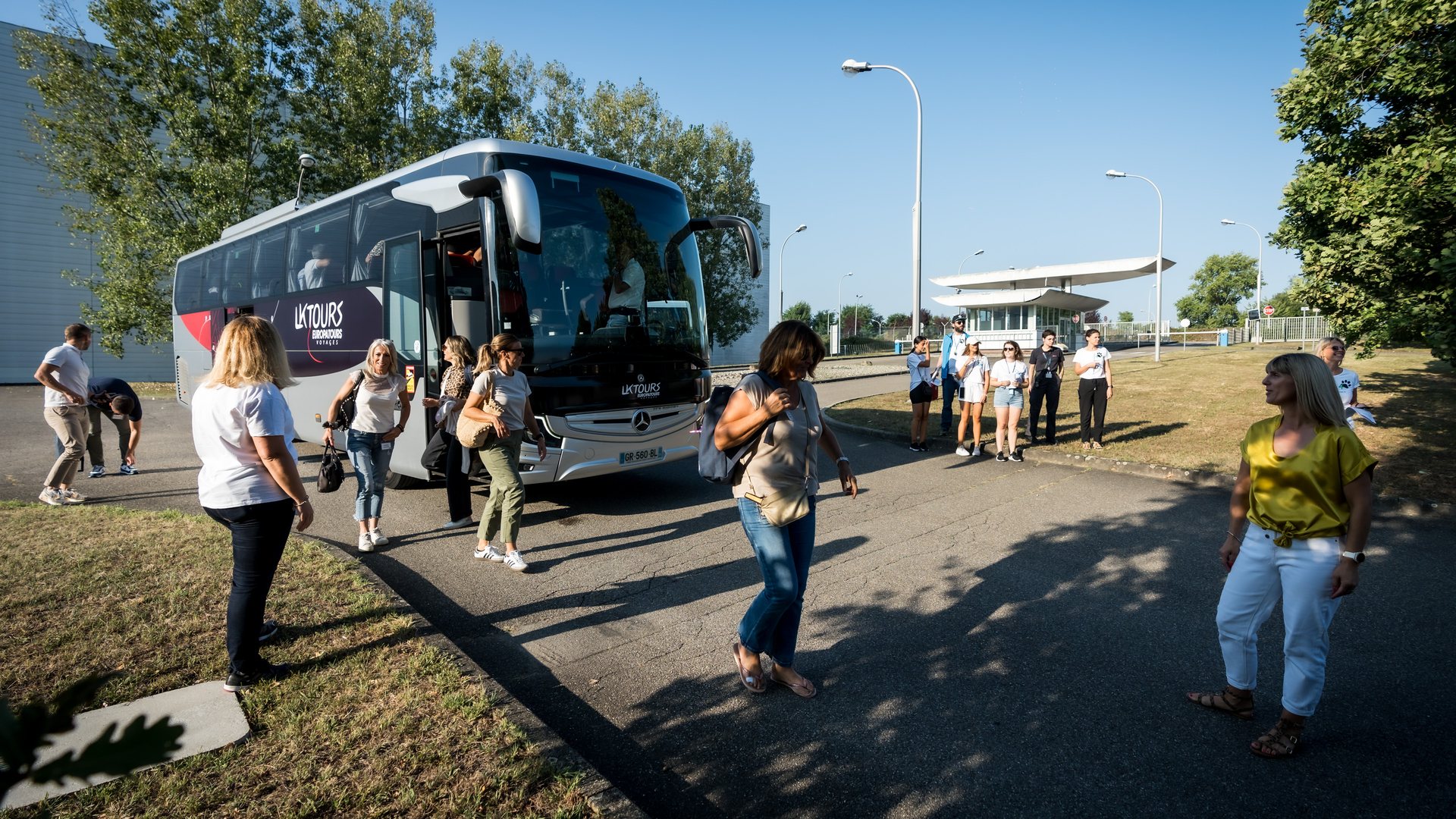
| On-site transfers | Distances, vehicles, number of rotations | Shared coach or shuttle, nearby venues so everything can be done on foot |
| Accommodation | Number of nights, type of hotel | Hotel at the event venue or a short walk away |
| Food and drink | Number of meals, menus, share of vegetarian dishes | Seasonal menu, regional produce, adjusted quantities |
| Venue and energy | Length of use, heating or air conditioning | Venue bathed in natural light, technical equipment sized to need |
| Production and decor | Equipment hired, bought or transported | Hire, reuse, donation of decor that is not reused |
| Goodies and printing | Quantities, materials, origin | Useful goodies or none, digital materials |
| Digital | Live streaming, videos, app | Formats sized to need |
For each lever, our tips for reducing the carbon footprint of a corporate retreat go into detail. The meals, venue and decor items depend heavily on suppliers: we choose them on criteria you can check.
Groupe Positive’s conference in Brussels: 300 participants from several destinations
For this 3-day conference at the Plaza Hotel, we managed participants’ travel from different destinations, then the transfers from airports and stations to the hotel. Departure cities, modes of transport, transfers: this is precisely the information an assessment records for the travel item.
Which indicators should you track after a corporate event?
A useful assessment comes down to a few figures that everyone understands. Here are the ones we suggest you track, from one event to the next:
- the total footprint and the footprint per participant, with the scope used;
- the share of participants who came by train or by group travel;
- the number of vegetarian meals served;
- the share of furniture and decor that was hired or reused;
- unserved meals collected by a partner charity;
- the quantities printed, and what moved to digital.
- The scope is written down: participants, duration, venues, items included.
- The registration form asks for the departure city and mode of transport.
- Supplier quotes specify meals, nights, equipment and printing.
- The calculation relies on a recognised tool and official emission factors.
- The heaviest items are identified, with a possible action for each.
- A few indicators are shared with your teams and your CSR department.
These benchmarks apply to an internal conference designed to lighten its footprint as well as to an evening event. For the planning choices themselves, see the simple choices behind a sustainable corporate event.
Event carbon footprint: frequently asked questions
The estimate compares several scenarios, for example two destinations or two modes of transport, so you can make an informed choice. The assessment then uses the event’s actual data. The two complement each other, and each assessment feeds into the estimate for the next event.
Yes. The emissions linked to your events are part of your indirect emissions, like purchasing and business travel. An assessment broken down item by item, with its scope and method, fits more easily into your reporting.
Yes. If you wish, Weevup estimates the footprint of your seminar or conference from the design stage, to lighten the items that weigh most. After the event, your Weever gathers the useful data and indicators with you.
Your event, measured with Weevup
Weevup, an event agency founded in Paris in 2015 and based in Le Vésinet (Yvelines), organises your corporate retreats, conferences and evening events in Paris, in the Île-de-France region, across France and abroad. EcoVadis silver medal (June 2026).