Event ROI measures what a corporate event has achieved against objectives set from the outset: sales, contacts, team buy-in, visibility. To calculate it, you need three things: clear objectives, a few well-chosen indicators and data collected at the right moment.
At Weevup, we define these objectives with you from the brief onwards, then plan data collection before, during and after the event. Here is our method, the KPIs to track for each type of event and our examples.
- ROI compares what the event brings in with what it cost; ROE measures whether the objectives were met.
- Everything starts with two or three objectives, each tracked by one indicator.
- Data is collected at registration, on site and after the event, with participants’ consent.
- Example: Parthena’s Roadshow, whose objectives were far exceeded.
What does the ROI of a corporate event measure?
Event ROI can be read on three levels. We track them together, because a successful event often works on all three at once.
Impact
What the event made known, to whom and with what response: attendance, mentions, coverage.
Engagement
How your guests took part, reacted and interacted: workshops, questions, polls.
Results
What happens next, within your teams as well as with your clients: meetings, sales, buy-in.
Some results are easy to count: sales signed after a client evening, orders linked to a launch, meetings converted. For a corporate retreat or a conference, much of the benefit is measured differently: buy-in to the strategy, team cohesion, client loyalty.
How do you calculate event ROI?
The formula is simple: ROI = (gains linked to the event − cost of the event) ÷ cost of the event × 100. A positive ROI means the event brought in more than it cost.
The cost covers the whole event: venue, catering, production, transfers, activities, as well as the time spent by your teams. The gains show up in your sales follow-up: sales and meetings you can link to the event, over a period set in advance.
For an internal event, the gains can rarely be put into figures. ROE, or return on objectives, then takes over: did the event have the intended effect? It is often the fairest indicator for a corporate retreat, a conference or a kick-off.
Which objectives should you set before the event?
A useful objective fits in one sentence: an audience, an expected effect, an indicator. We advise you to keep two or three, no more.
Sell
Generate sales meetings with your clients and prospects.
Launch
Raise awareness of a product or a new brand.
Engage
Help your employees understand and embrace a strategy.
Build loyalty
Thank your top clients and strengthen the relationship.
Unite
Bring teams, departments or sites closer together.
Recruit
Make people want to join you and showcase your culture.
These objectives belong in the specification for your event. They then guide the format, the venue and the programme.
Which KPIs should you track to measure event ROI?
Each objective calls for its own key performance indicators, or KPIs. Here are the ones we suggest most often, and where to find the data.
| Your objective | KPIs to track | Where to find the data |
|---|---|---|
| Sell | Meetings booked, qualified contacts, quotes and sales signed afterwards | Your CRM and your sales teams |
| Launch | Guests attending, demonstrations given, mentions and coverage | Sign-in sheet, social media, press |
| Engage | Understanding of key messages, questions asked, stated buy-in | Live polls, questionnaire |
| Build loyalty | Guest attendance rate, satisfaction, new conversations | Registrations, questionnaire, sales follow-up |
| Unite | Satisfaction, workshop participation, desire to come back | Questionnaire, app, feedback from managers |
| Recruit | Applications received, visits to your careers page | Your recruitment tool, your web analytics |
The attendance rate is simple to calculate: guests attending ÷ guests registered. A few well-chosen indicators are worth more than a long dashboard: together, we keep the ones that will really be tracked.
Which event KPIs should you track for each type of event?
A roadshow is not measured like a team evening. Here are the indicators that matter most for each major format.
Corporate retreat and kick-off
Understanding of key messages, workshop participation, satisfaction. For a corporate retreat, a poll at the start and end of the plenary session shows what has been understood.
Conference
Buy-in to the strategy, questions asked, managers passing on the message. For a company convention, such as Toupret’s Cap 30 Connect convention, an interactive platform offered polls, word clouds and live reactions.
Roadshow and client event
Guests attending, meetings booked, sales afterwards. For a roadshow, each stop is compared with the others, city by city.
Product launch
Attendance, demonstrations, mentions and press coverage. A product or brand launch is also measured in sales over the following weeks.
Corporate evening event
Attendance rate, satisfaction, shared memories. For a corporate evening event, turnout already says a lot about the desire to get together.
Team building
Participation, atmosphere, desire to do it again. Team building is measured above all through feedback from teams and their managers.
How do you collect event data?
Event data is gathered in three stages. We plan data collection from the design stage, so that it stays simple for your guests.
- At registration. An online form gathers the essentials: job title, expectations, dietary requirements, accessibility needs. This is also where each person gives consent for the use of their data and image.
- During the event. Sign-in, badges, an app or live polls capture participation in real time. For the Cherry Ventures retreat, a dedicated app served as agenda and communication platform, and made it easy to gather participants’ impressions and feedback.
- After the event. A short questionnaire measures satisfaction and gathers ideas. Contact follow-up then continues in your CRM, with your sales teams.
For visibility, a few figures are enough: posts by participants, mentions of your brand, views of a livestream, press coverage. A dedicated hashtag makes tracking easier, and our event communications agency prepares this content with you.
In every case, personal data is collected with participants’ explicit consent, limited to what serves the objective and stored securely, in compliance with the GDPR.
What should you do with the results after the event?
The review compares each objective with its result, including what worked well and ideas for the next edition. On the sales side, contact follow-up turns conversations into meetings. Internally, sharing the results with participants keeps the collective momentum going.
The review can also include CSR: share of vegetarian meals, hired or reused decor, dishes collected by our partner charity. If you wish, we can estimate the carbon footprint of your event from the design stage.
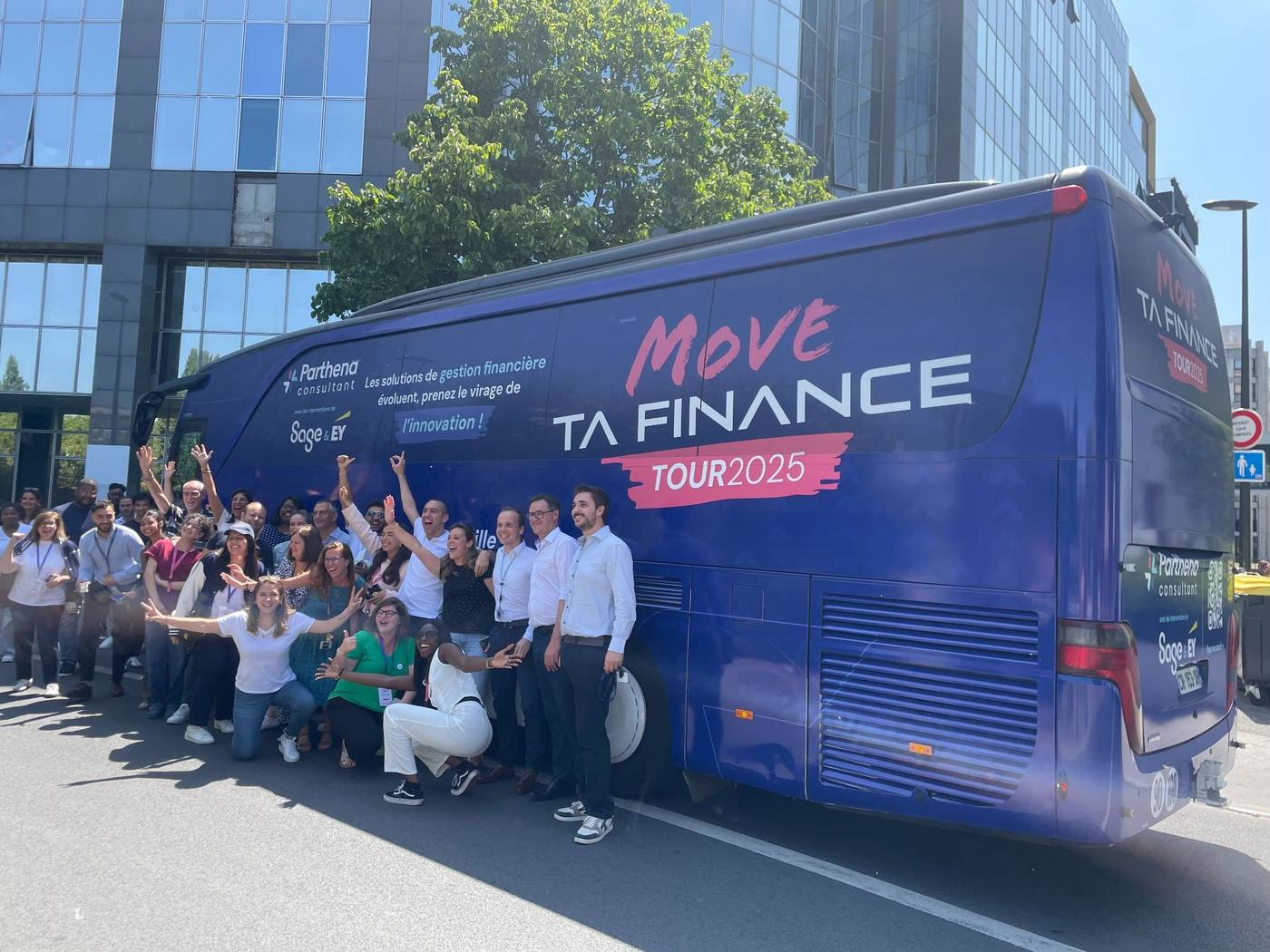
Parthena’s Roadshow: objectives far exceeded
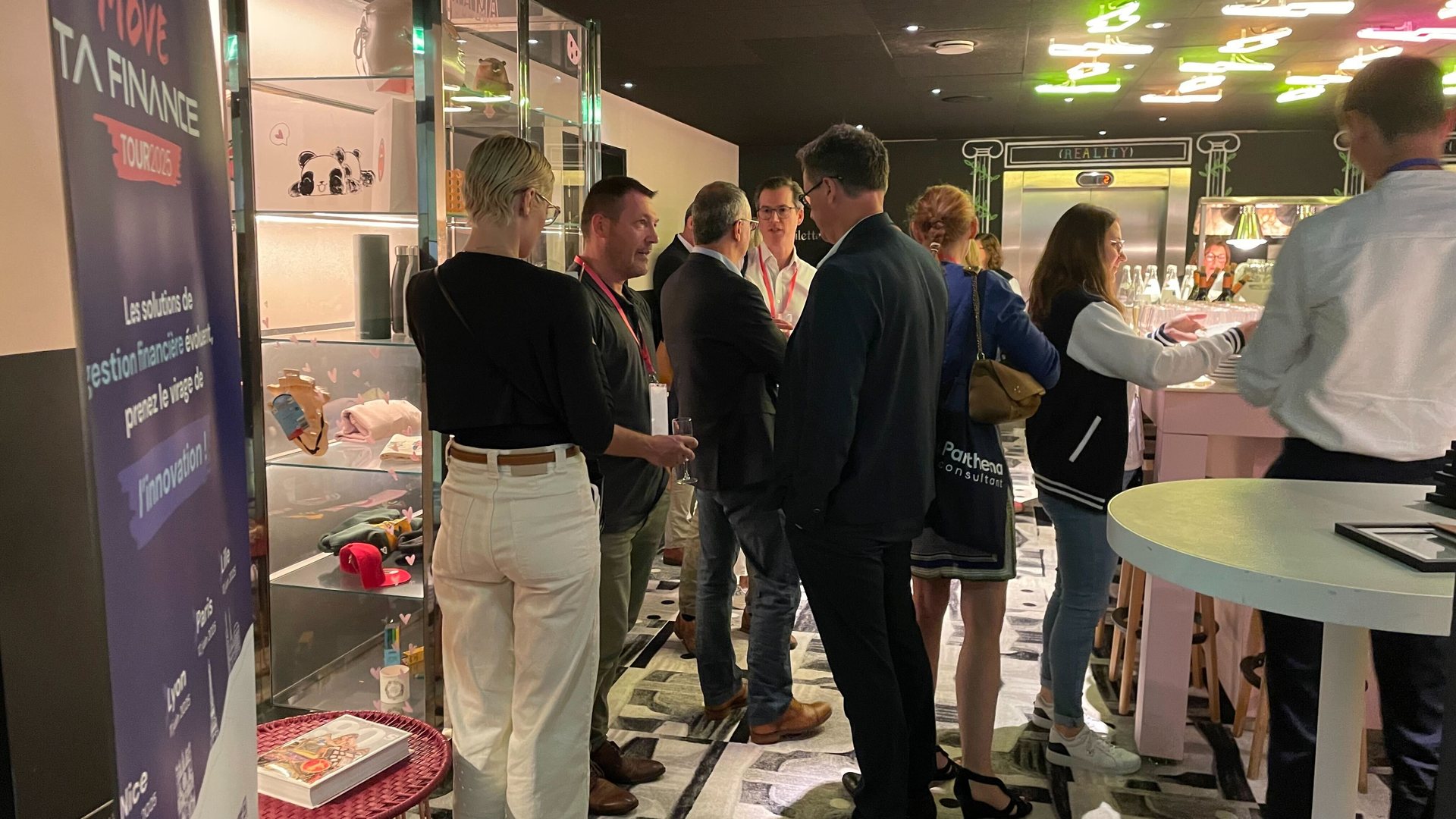
To promote its new financial management solutions to its clients and partners, Parthena entrusted us with a tour of France in four cities: Nice, Lyon, Paris and Lille. The result: objectives “far exceeded”, a relaunched offer, won-over clients and a strong sense of collective pride.
Frequently asked questions about event ROI
We start from your objectives: ROI = (gains linked to the event − cost of the event) ÷ cost × 100. The gains show up in your sales follow-up, over a period set in advance. For an internal event, we track the return on objectives instead.
ROI compares what the event brings in with what it costs. ROE, or return on objectives, checks that the event had the intended effect: buy-in, cohesion, loyalty. We track both with you.
We choose them with you according to the objective: meetings and sales to sell, attendance and coverage to launch, polls and a questionnaire to engage your teams. Two or three indicators are enough.
We plan data collection from the design stage: a form at registration, sign-in, an app or polls during the event, a questionnaire afterwards. For Cherry Ventures, a dedicated app made it easy to gather participants’ impressions and feedback.
Above all, we measure whether the objectives were met: a poll at the start and end of the plenary session, workshop participation, then feedback from managers some time later. For Toupret’s convention, an interactive platform offered polls, word clouds and live reactions.
We advise a first review just after the event, with the satisfaction questionnaire, then a second once sales follow-up is well under way. The period is set from the outset, along with your objectives.
Yes, we build measurement into the organisation: objectives from the brief, data collection, questionnaire and review. For Parthena, the Roadshow far exceeded its objectives.
Let’s measure your next event together
Weevup, an event agency founded in Paris in 2015 and based in Le Vésinet (Yvelines), organises your corporate retreats, conferences and corporate evening events in Paris, the Île-de-France region, the rest of France and abroad. EcoVadis silver medal (June 2026).